
Logo

Product Design

details detailed design

Transforming Concepts into Scalable, Manufacturable Solutions

At BAG Electronics, we collaborate with our partners across the entire product development lifecycle—from concept and design to mass production and post-market support. Our engineering capabilities are tailored to meet the stringent quality, compliance, and performance requirements of sectors including automotive, industrial automation, smart lighting, medical devices, and a broad range of EMS applications.

By combining system-level thinking with precision execution, we empower customers to accelerate time-to-market, lower production risks, and achieve long-term cost efficiency.

1. Concept Development & System Architecture
Designing Products Built for Performance, Precision & Production

Once the product concept is defined, we translate it into engineering blueprints and production-ready designs.

Our capabilities include:
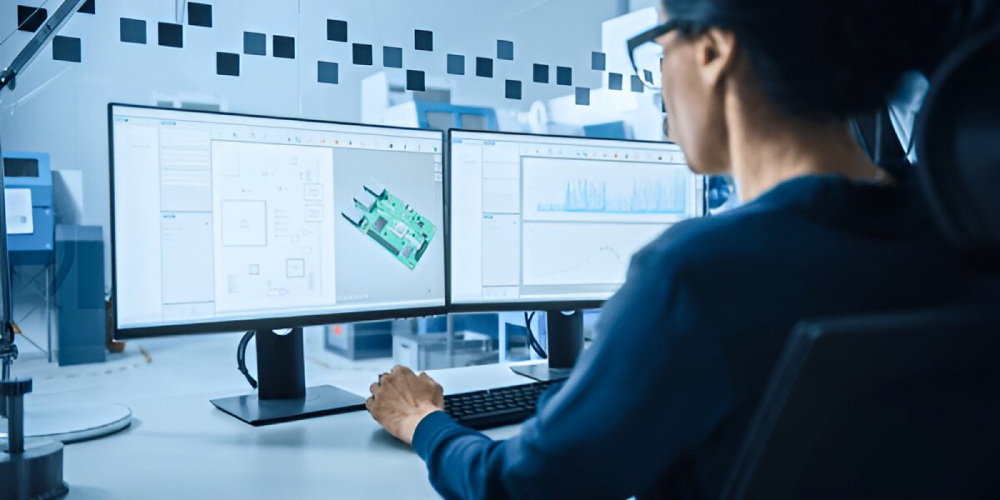
1 Electrical Design PCB Layout
Electrical Design & PCB Layout

Multi-layer board design optimized for signal integrity, thermal management, and component density.

1 mechanical engineering
Mechanical Engineering

CAD modelling, tolerance analysis, thermal simulation, and enclosure design for IP-rated products.

1 firmware and embedded system
Firmware & Embedded Systems

Real-time OS, communication protocols (CAN, LIN, BLE), motor control algorithms, and custom drivers.

1 simulation and validation
Simulation & Validation

Signal simulation (SI/PI/EMC), 3D thermal models, and digital prototyping to reduce iteration cycles.

1 pre compile testing
Pre-Compliance Testing

Addressing EMC/EMI, surge, and ESD requirements before formal testing begins.

We also support rapid prototyping, EVT/DVT builds, and validation documentation aligned with your internal stage-gate process.

From Market Insight to Product Vision

We start by deeply understanding your product’s purpose, user requirements, and business context. Our engineering team collaborates with your R&D, product, and innovation teams to shape a concept that is both commercially viable and technically feasible.

Our process includes:
2 user need analysis
User need analysis

Translating customer pain points into actionable features.

2 breadboarding
Breadboarding and feasibility testing

Rapidly evaluating functionality before committing to full development.

2 system level architecture design
System-level architecture design

Selecting the best-fit technologies, microcontrollers, sensors, and communication protocols.

2 eary stage material analysis
Early-stage materials and component analysis

Assessing mechanical and electrical fit, lifecycle, and cost.

2 technology scouting
Technology scouting

Evaluating emerging materials, wireless tech, or thermal solutions aligned with your vision.

2 BOM COSTING
Preliminary BOM costing

Generating early estimates to align the design with your target pricing and scalability goals.

This phase ensures your idea is grounded in technical logic, manufacturability, and real-world constraints.

Built-In Quality. Reduced Risk. Optimized Cost.

Designing great products isn’t just about function—it’s about foresight. Our DfX practice helps ensure that the product will perform reliably, assemble efficiently, and comply globally.

We implement:
3 design for manufacturing
Design for Manufacturability

Aligning layout and mechanical design to SMT/THT processes, stencil printing, pick-and-place, and panelization requirements.

3 design for assembly
Design for Assembly

Minimizing part counts, improving cable routing, connector selection, and tool access.

3 design for test
Design for Test

Incorporating test points, boundary scan, and fixture design for ICT and functional testing.

3 design for reliability
Design for Reliability

Engineering for thermal cycling, vibration, moisture, and power transients.

3 design for cost
Design for Cost

Selecting high-availability components, optimizing for standard part usage and yield-driven decisions.

Our team ensures that every design is ready for scale with minimal rework or redesign in the production phase.

Bridging the Gap Between Engineering and Mass Production

NPI is where engineering meets execution. Our dedicated NPI team handles the first builds with precision, ensuring feedback loops are tight, and any issues are resolved before full ramp-up.

NPI services include:
  • Controlled low-volume production environment
  • Pilot production runs for EVT/DVT/PVT phases
  • Tooling & fixture development for early testing
  • First Article Inspection (FAI) and validation reports
  • Rapid Engineering Change Order (ECO) integration
  • Real-time collaboration with your design teams

This process ensures a seamless transition from lab to line, minimizing cost, improving ramp speed, and reducing early-life failures.

Extending Product Lifespan. Improving Economics.

We provide long-term engineering support to help you respond to field issues, reduce cost, and adapt to component obsolescence without sacrificing performance.

Our services include:
  • ECO implementation and documentation
  • Component substitution and lifecycle management
  • Cost-down redesigns without feature loss
  • Failure analysis and design corrections
  • Reverse engineering for legacy products
  • Software and firmware updates to maintain security and compliance

Our sustaining engineering ensures that your products remain competitive, compliant, and cost-effective across their full lifecycle.

Empowering Next-Gen Products Through Collaboration

Whether you’re a startup exploring your MVP or an enterprise bringing next-gen electronics to market, BAG becomes an extension of your innovation team. We work under flexible engagement models—turnkey, joint development, or IP-sensitive collaboration—to support new technologies and disruptive product categories.

Focus areas include:
  • Automotive EV systems
  • Smart lighting and connected IoT controls
  • Power electronics for industrial automation

Our agile engineering model helps you prototype, validate, and scale disruptive ideas quickly and securely.